
Why Humanity Is Not Prepared for First Contact
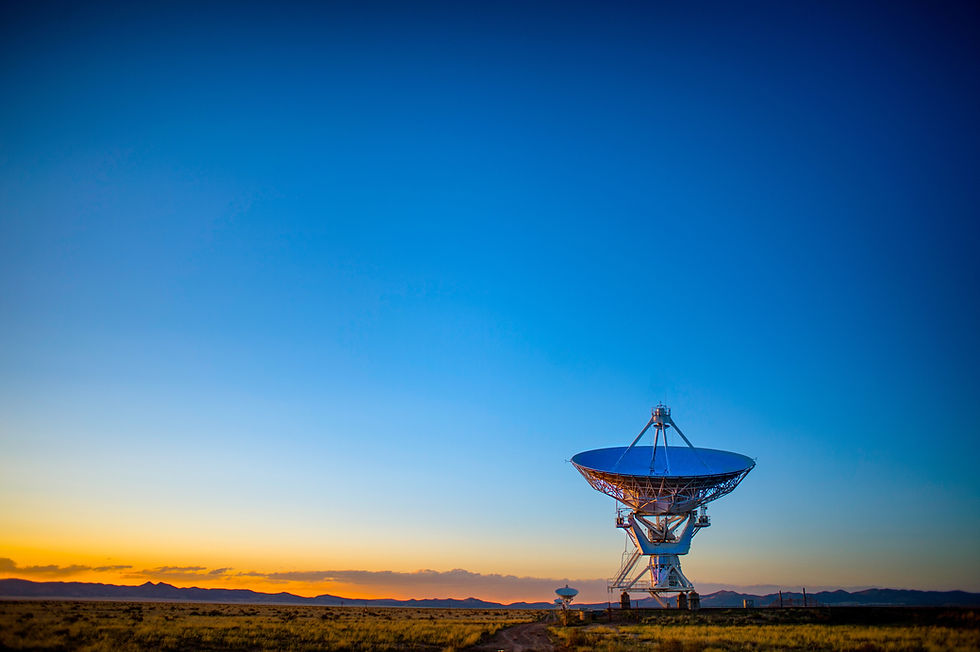
When people imagine first contact with an extraterrestrial civilisation, they often focus on technology.
Do we have the right telescopes?
Can we build faster spacecraft?
Do we possess the scientific knowledge required to communicate with an alien species?
These are important questions.
But they may not be the most important ones.
The uncomfortable truth is that humanity's greatest weakness has never been technology.
It has always been ourselves.
We have split the atom, mapped the human genome, landed on the Moon, and built machines capable of communicating across the planet in seconds. Yet despite these achievements, we continue to struggle with problems much closer to home.
We argue over politics.
We divide ourselves by nationality, religion, ideology, and culture.
We distrust those who think differently from us.
And we often react to uncertainty with fear rather than curiosity.
If first contact occurred tomorrow, these human tendencies would not disappear.
They would be amplified.
Imagine the announcement: an extraterrestrial intelligence has been confirmed.
The scientific implications would be extraordinary, but the social consequences could be even greater. Governments would compete for information. News organisations would race to control the narrative. Social media would explode with speculation, misinformation, conspiracy theories, and outright fabrication.
Some people would celebrate.
Some would panic.
Many would refuse to believe it.
Others would see the event through political, religious, or ideological lenses.
Before humanity ever spoke to an alien civilisation, we would likely spend months arguing amongst ourselves about what was happening.
This is not a criticism of humanity.
It is simply an observation.
We are a species that evolved to respond to immediate threats and familiar environments. First contact would challenge nearly every assumption we hold about our place in the universe.
For thousands of years, humanity has viewed itself as the central actor in its own story. The confirmation of another intelligent civilisation would force us to reconsider that position.
Some people would adapt quickly.
Others would struggle.
History shows that societies often find major paradigm shifts difficult. Whether the challenge was discovering that Earth was not the centre of the universe or accepting new scientific understandings of our origins, transformative ideas have rarely been embraced immediately.
First contact would be the greatest paradigm shift in human history.
And unlike previous discoveries, it would not simply change what we know.
It would change how we see ourselves.
Perhaps the most revealing aspect of first contact would not be the behaviour of the visitors.
It would be our own reaction.
Would we cooperate?
Would we compete?
Would we approach the unknown with curiosity or fear?
The answers to those questions may determine the outcome long before any alien civilisation has the opportunity to influence it.
The challenge of first contact is not waiting somewhere among the stars.
It already exists here on Earth.
Until we learn to understand ourselves better, we may discover that humanity's greatest obstacle to first contact is humanity itself.


